
The skincare aisle has never been longer, and the promises on those products have never been bigger. Clinically proven. Dermatologist tested. Advanced formula. And yet, for many Australians dealing with specific skin concerns, the over-the-counter route simply doesn’t deliver meaningful results.
When your skin has a medical issue—acne that persists despite every over-the-counter cleanser and treatment, rosacea that flares despite gentle skincare, or hyperpigmentation that refuses to fade – prescription skincare in Australia is often the next logical step.
What Over-the-Counter Products Can and Can’t Do
Skincare products you can buy at a store are made to be safe for anyone to use without a doctor’s help. This means they have amounts of the good stuff in them compared to what you can get with a prescription. For example, a retinol product at the pharmacy might have 0.1 to 0.3 percent retinol in it.
Retinol products that you need a prescription for can be a lot stronger and often work much better for things like acne, sun damage, and wrinkles. You might not realize how much better prescription retinol products are until you start using them instead of the stuff you can buy at the store.
Common Conditions That Benefit From Prescription Treatment
Acne, the kind that is really bad, does not get better with the stuff you buy at the store. You need to see a doctor to get creams like retinoids and antibiotics, and sometimes you even need to take pills. These things work a lot better than anything you can buy at the store. Some other skin problems, like rosacea, melasma, eczema, and psoriasis, are better treated with medicine that you need a prescription for.
The Role of a Dermatologist or GP
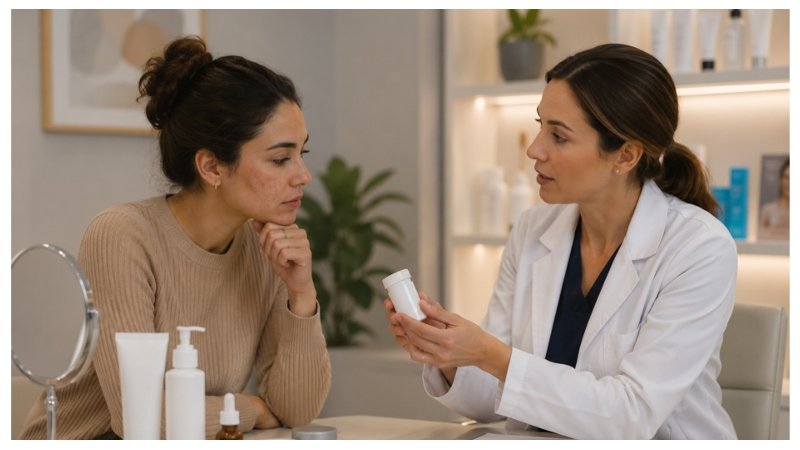
To get the prescription skincare, you need to see the right person. You should go see a dermatologist because they can figure out what is going on with your skin and give you a plan that’s just for you. General practitioners can also give you prescriptions for skin treatments, especially if you have something like acne that a lot of people get.
The consultation is really important. It helps you get a diagnosis of your skin condition rather than just guessing what is wrong with your skin. This way you know for sure what your skin needs and you can get the prescription skincare. Seeing a dermatologist or a general practitioner is the step to getting the right prescription skincare.
Combining Prescription and Supportive Skincare
When you use prescription treatments they work well if you also take good care of your skin. You should clean your skin gently, use a moisturizer that’s right for your skin and protect your skin from the sun every day. This helps the prescription treatments work better and can stop your skin from getting too dry or irritated. Prescription treatments and a good skincare routine go well together.
If the skincare products you buy at the store are not working for you and your skin problems are still there, you might want to think about getting a prescription. The best way to figure out if this is an idea is to talk to your doctor or dermatologist.