
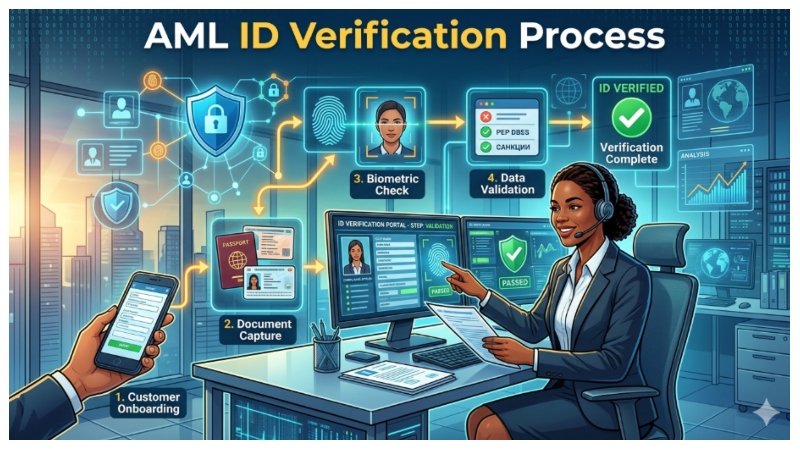
Financial institutions face increasing pressure to identify customers accurately while maintaining compliance with anti-money laundering regulations. A risk-based AML ID verification process helps organizations allocate resources effectively, reduce compliance risks, and improve customer onboarding. Instead of applying the same level of scrutiny to every customer, businesses can assess risk factors and apply appropriate verification measures.
This approach enables organizations to strengthen compliance programs while improving operational efficiency.
Understanding Risk-Based AML Verification
A risk-based approach focuses on evaluating the potential risk associated with each customer before determining the level of due diligence required. The goal is to identify individuals or entities that may pose a higher risk of money laundering, terrorist financing, or other financial crimes.
An effective AML ID Check process starts with collecting customer information and validating its authenticity. Organizations then assess various risk indicators to determine whether enhanced verification measures are necessary.
By adopting this methodology, businesses can avoid unnecessary friction for low-risk customers while dedicating more attention to higher-risk cases.
Key Components of AML Identification
Accurate AML Identification serves as the foundation of any compliance framework. Businesses must verify the identity of customers using reliable data sources and official documentation. Verification procedures should be designed to confirm that the customer is genuine and that the provided information is accurate.
Risk assessments often consider factors such as geographic location, business activities, transaction behavior, and customer profile. These elements help compliance teams categorize customers into different risk levels and determine the appropriate level of scrutiny.
Steps to Build a Risk-Based Verification Framework
Organizations can establish a structured verification process by following several important steps:
- Define customer risk categories and assessment criteria.
- Collect and verify identity information using trusted sources.
- Apply appropriate due diligence measures based on risk levels.
- Monitor customer activity continuously for unusual behavior.
- Review and update risk models regularly to address emerging threats.
These steps create a consistent framework that supports regulatory compliance and operational efficiency.
The Role of Technology in Verification
Modern compliance programs increasingly rely on AML tools to streamline identity verification and risk assessment. Automated systems can process large volumes of customer data, identify inconsistencies, and detect potential red flags more efficiently than manual methods.
Technology also reduces the likelihood of human error while accelerating onboarding processes. By integrating digital verification capabilities, organizations can strengthen compliance efforts without creating unnecessary delays for legitimate customers.
Many businesses use specialized AML solutions to automate customer verification, document validation, and risk scoring. These platforms help compliance teams make informed decisions based on real-time information and predefined risk parameters.
Integrating an AML Screening System
A comprehensive AML Screening System plays an important role in identifying potential risks during customer onboarding and throughout the business relationship. Screening procedures typically involve checking customer information against sanctions lists, watchlists, politically exposed persons databases, and adverse media sources.
When screening results indicate potential concerns, organizations can conduct additional reviews to determine whether further investigation is necessary. This layered approach improves risk management while supporting regulatory obligations.
Continuous monitoring should also be incorporated into the screening process. Customer risk profiles can change over time, making ongoing assessment an essential component of effective compliance programs.
Choosing the Right AML Service Provider
Selecting a reliable AML Service provider is critical when building a risk-based verification process. Providers should offer robust identity verification capabilities, accurate data sources, and flexible risk assessment features.
Organizations should evaluate factors such as system integration, regulatory coverage, scalability, and reporting functionality before making a decision. A trusted provider can help businesses maintain compliance while adapting to evolving regulatory requirements.
The right partner can also support global operations by providing access to international data sources and advanced verification technologies.
Building a Strong AML System
A well-designed AML system combines identity verification, risk assessment, screening, monitoring, and reporting into a unified compliance framework. Integration between these functions enables organizations to gain a complete view of customer risk and respond quickly to potential threats.
Regular audits, policy reviews, and employee training further strengthen the effectiveness of the system. Compliance teams should continuously evaluate performance metrics and adjust procedures as regulations and risk environments evolve.
Conclusion
Building a risk-based AML verification process requires a combination of accurate customer identification, ongoing risk assessment, and advanced technology. Organizations that implement effective verification frameworks can improve compliance, reduce operational burdens, and better protect themselves against financial crime.
By leveraging modern verification technologies, integrating an AML Screening System, and working with a reputable AML Service provider, businesses can create a scalable and efficient compliance program. A strong risk-based approach not only supports regulatory obligations but also enhances customer trust and long-term business resilience.