
A kitchen manager in Atlanta once told me the worst part wasn’t finding the cockroach. It was finding it during a dinner rush, in full view of a table that had just ordered appetizers. The family didn’t say anything. They just left. Didn’t touch the food. Didn’t ask for the check. Just quietly gathered their things and walked out.
He never forgot that table.
Cockroaches don’t announce themselves gradually. One day you don’t have a problem, and then suddenly you very much do—and the gap between those two states is usually measured in weeks, not months. By the time you’re seeing them in daylight, in open areas, the infestation behind your walls has been going on for a while.
The Cleanliness Myth Is Costing Businesses Real Money
Ask most business owners why they got cockroaches, and they’ll go quiet and uncomfortable, like you’ve accused them of something. That reaction makes sense given how the pest is culturally framed—as a sign of filth, neglect, and failure. It’s mostly wrong.
German cockroaches, which are the species wreaking havoc in the majority of commercial kitchens and office buildings across the country, need three things to thrive: warmth, moisture, and a gap to enter through. That’s it. A pristine hospital cafeteria has all three. So does a newly renovated hotel lobby with a loading dock that gets propped open on delivery days.
The German cockroach specifically can compress its body to squeeze through a gap roughly the thickness of two credit cards stacked together. It’s primarily active between 2 a.m. and 4 a.m. It avoids open spaces when populations are small, which means the first one you see in the open during business hours is almost certainly not a lone wanderer—it’s a scout getting pushed out because the harborage behind your equipment is already overcrowded.
One female and her offspring, under favorable conditions, can theoretically produce 30,000 cockroaches in twelve months. Think about that number for a second.
Why the Hardware Store Stuff Doesn’t Work
Not permanently, anyway.
Consumer-grade roach products—the foggers, the spray cans, the little bait stations—kill cockroaches they come into direct contact with. That sounds useful until you understand that the cockroaches living inside the motor housing of your commercial refrigerator, in the wall void behind your three-compartment sink, in the stack of corrugated boxes sitting on your dry storage floor, will never come into contact with anything you spray on the counter.
You’re killing foragers. The colony keeps reproducing.
Then there’s resistance. German cockroaches have been exposed to consumer insecticides for decades, across thousands of generations. Resistance to pyrethroids – one of the most common active ingredient classes in off-the-shelf sprays – is now so widespread in some populations it’s essentially the default. Spraying more doesn’t overcome resistance. It just keeps killing the small percentage of the population that isn’t resistant, while the resistant individuals breed freely.
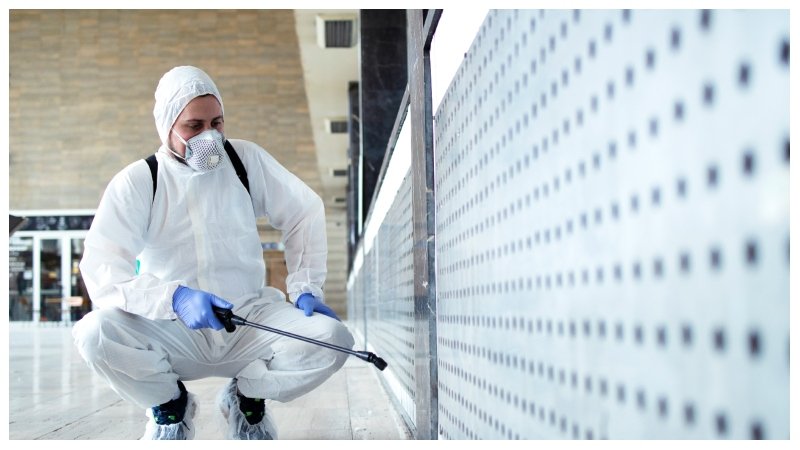
A professional pest control cockroach program works differently, not just stronger. The products reach harborage sites that surface sprays can’t. The application strategy is built around the cockroach’s actual biology – where it forages, how far it travels, what it’s attracted to. And critically, follow-up visits are timed around the breeding cycle, not around when it’s convenient to come back.
What Happens When a Professional Actually Shows Up
The Inspection Takes Longer Than Most People Expect – For Good Reason
A thorough commercial inspection isn’t a ten-minute walk-through. A trained technician is methodically working through the property looking for harborage sites, moisture sources, entry points, and what the industry calls “conducive conditions” – the structural and sanitation factors that make an environment hospitable to cockroaches in the first place.
They’ll be behind equipment you haven’t moved in years. Inside electrical panels and junction boxes. Underneath floor mats. Checking where utility lines enter the building. The inspection findings drive the entire treatment approach – without it, you’re guessing.
Gel Bait Is More Sophisticated Than It Sounds
Professional gel baits aren’t the dried-out supermarket discs people have tried and dismissed. The formulations are engineered to be highly attractive to cockroaches, to remain palatable for weeks in commercial environments, and to work through secondary transmission – the cockroach eats the bait, goes back to the harborage site, dies there, and other cockroaches contact the carcass and receive a secondary dose. The effect moves through the colony.
Insect Growth Regulators – Nobody Talks About These Enough
IGRs are compounds that disrupt cockroach development at the hormonal level. Juveniles exposed to them can’t mature into reproducing adults. Adults produce non-viable eggs. They don’t kill anything directly, which makes them frustrating for clients who want to see immediate results—but they are what actually collapses breeding populations over a four-to-six-week period.
Most professional cockroach programs use IGRs as standard. Consumer products rarely include them. This single gap accounts for a lot of why professional treatment succeeds where DIY repeatedly fails.
The Documentation Question—Boring but Important
Businesses in food service, healthcare, and hospitality don’t just have cockroach problems as a pest issue. They have them as a compliance issue. Health code violations for pest activity are documented, recurring, and expensive. An inspector finding evidence of cockroach activity isn’t going to be satisfied by your explanation of the bait stations you put out last month.
A contracted commercial pest control program generates service records. Those records show dates of inspection, findings, treatments applied, recommendations made, and follow-up visits completed. They demonstrate that a licensed professional has been managing the property proactively, not reactively. That paper trail is worth having independent of whether there’s active pest pressure at the moment of inspection.
Realistic Expectations on Timeline
A moderate German cockroach infestation in a commercial kitchen – the kind where you’re seeing occasional activity but nothing overwhelming – typically requires four to six weeks of active treatment before populations are genuinely under control. Heavy infestations with extensive harborage take longer. Properties with difficult structural access take longer.
Anyone promising complete elimination after one visit is either working on a very minor problem or setting you up for disappointment. Eggs already laid at the time of first treatment will hatch regardless of what was applied. The follow-up visit two to three weeks later is there specifically to address that next generation. The one after that confirms the IGR did its job.
That’s not upselling. That’s the life cycle of the insect you’re dealing with.
The Part Most Business Owners Skip
Exclusion. The chemical treatment addresses the existing population. Exclusion is what stops the next one.
Every professional inspection produces a list of conditions that need to be corrected: gaps around pipe penetrations, broken door sweeps, drainage issues, storage practices that create harborage. Some of these get handled by the pest company. Many require the client to follow through.
The programs that fail long-term – meaning populations keep coming back a few months after treatment – almost always involve a client who treated seriously and excluded poorly. The cockroaches weren’t being maintained by bad treatment. They were being reintroduced through a gap under the back door that nobody sealed.
On the Cost Question
Monthly pest management contracts feel like an overhead cost. They are, in the same way that a working fire suppression system is overhead. You don’t notice it until the day you really need it.
A serious cockroach infestation in a food service environment costs real money to remediate – more treatments, more product, more technician time. A health code violation costs more still. A photograph from a customer that ends up online costs something you can’t fully calculate.
The kitchen manager from Atlanta eventually got his infestation under control. It took eleven weeks and a partial equipment relocation to treat one harborage site properly. He now has a monthly service contract. Says it’s the least interesting line on his P&L, which is exactly how it should feel.
Frequently Asked Questions
Is one cockroach during the day really cause for concern?
In a commercial setting, yes. Cockroaches are nocturnal and avoid exposure when colonies are small. Seeing one in daylight, in an open area, during business hours almost always means the population in harborage areas is large enough to be pushing individuals out. Treat it as a sign that something established is already there.
How are professional products different from store-bought ones?
Professional products differ in three ways: formulation (more attractive baits, longer residual life), active ingredients (including compounds and IGRs not available over the counter), and application method (targeted to actual harborage sites rather than surfaces). The licensing requirement for commercial application exists partly because these products are genuinely more potent and require trained judgment about where and how they’re used.
What do I need to do to prepare for a treatment?
Your technician should give you a specific prep list. Generally for commercial kitchens: cover or remove food and food-prep surfaces, empty areas under sinks and behind equipment for access, and avoid cleaning treated surfaces for a period after application. Following the prep instructions matters – improper prep is one of the most common reasons first treatments underperform.
How do I know the treatment is working?
You may actually see more cockroach activity in the first few days after gel bait is applied—they’re finding and consuming it. That’s normal. Over two to three weeks, activity should decrease noticeably. By the follow-up visit, populations should be significantly reduced. If you’re not seeing a clear downward trend by week four, that’s worth raising with your technician.
Can cockroaches come back after full elimination?
Yes, especially in commercial environments where the building receives regular deliveries, has multiple entry points, or shares walls with adjacent units. This is why ongoing maintenance service exists. A population can be fully eliminated and reintroduced from outside through a cardboard delivery box, a gap in a shared wall, or a drain connection to an adjacent unit. Maintenance programs catch reintroduction early, before it reestablishes.
Do I need pest control if I haven’t seen any cockroaches yet?
For commercial food service, healthcare, or hospitality environments, preventive programs make economic sense. These environments are consistently attractive to cockroaches, and catching early activity before it becomes an infestation costs a fraction of what remediation costs. The absence of visible cockroaches doesn’t mean the building is unsuitable for them. It may just mean you’re not looking at 3 a.m.