
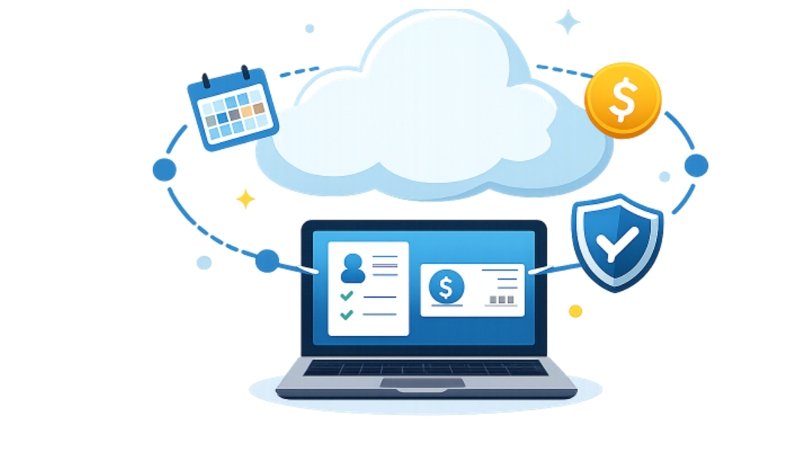
In today’s ever-evolving business landscape, efficient payroll management is essential for maintaining accuracy and ensuring compliance. Many businesses still rely on outdated payroll systems that can lead to costly errors and unnecessary administrative burdens. Transitioning to a cloud payroll management solution represents a forward-thinking approach that leverages automation and real-time data to enhance business operations.
Cloud payroll systems integrate seamlessly with other business applications, helping organizations stay ahead in regulatory compliance while improving payroll accuracy. The ability to securely access payroll data from any location empowers both employers and employees, reducing delays and misunderstandings. Paired with increased process automation, cloud payroll not only minimizes the risk of human error but also saves valuable administrative time.
For companies seeking to maintain competitiveness while managing rapid growth, cloud payroll is a strategic investment. Modern solutions enable organizations to keep pace with regulatory updates, simplify tax filings, and integrate crucial HR or accounting functions for holistic business management.
Key Takeaways
- Cloud payroll systems offer real-time access and process automation to minimize errors and save time.
- These platforms ensure up-to-date compliance with changing tax laws and employment regulations.
- Easy integration with business tools helps create a unified, efficient workflow.
- Scalable functionalities allow payroll processes to adapt as a business expands.
Benefits of Cloud Payroll Systems
The advantages of switching to a cloud-based payroll platform are significant and can transform business operations. Here are some of the main benefits:
- Real-Time Access: Cloud platforms provide online access around the clock, enabling employers and employees to review pay information anytime. This boosts transparency and speeds up the resolution of payroll-related questions.
- Automation: Routine processes, calculations, and even tax filings are automated, resulting in fewer human errors and more punctual payroll runs.
- Compliance: Continuous updates help businesses stay in compliance with tax laws and employment regulations that are frequently changing.
- Integration: By connecting seamlessly to other business applications, cloud payroll reduces duplicate data entry and ensures consistency across HR and accounting functions.
Additionally, cloud payroll providers now frequently offer mobile apps, which further optimize employee self-service capabilities. Through these apps, employees can view pay stubs, change their direct deposit details, request time off, and access tax documents on the go. This added flexibility supports a positive workplace experience and empowers staff to take greater control over their personal payroll information.
Recent Developments in Cloud Payroll Solutions
The industry is evolving rapidly as companies continue to innovate with their cloud-based payroll offerings. Among the latest advancements:
- Guardian Payroll Services recently launched a people-centric payroll platform tailored for small and mid-sized businesses. This approach blends supportive customer service with automated compliance tools to make payroll management more manageable and reliable.
- CloudPay released an ‘out-of-the-box’ payroll solution designed to help midsize companies simplify complex payroll processes with fixed fee packages and fast onboarding in as little as 60 days.
Cloud payroll solutions are also contributing to business resilience by supporting flexible work environments and remote payroll management. For example, platforms like Gusto and Paychex help businesses onboard new employees and run payroll safely online, supporting remote teams and hybrid workplaces. For more information about the growth of remote work and HR technology, visit The New York Times business section.
Another emerging trend in the industry is the use of artificial intelligence (AI) and machine learning to further streamline payroll processes. These technologies are increasingly being adopted to proactively detect anomalies, forecast payroll costs, and respond to regulatory changes faster than ever before. AI-powered chatbots are now being integrated into cloud payroll solutions, answering employee questions in real time and freeing HR teams to focus on more strategic tasks.
Choosing the Right Cloud Payroll Provider
Selecting the most suitable cloud payroll partner requires careful consideration. Key aspects to focus on include the following:
- Scalability: Can the solution handle additional employees and regulatory complexities as your business grows?
- Integration Capabilities: Does it integrate with your existing accounting or HR software to unify business processes?
- User Experience: Is the interface intuitive and easy for both employees and payroll administrators to use?
- Customer Support: Are robust support options available to swiftly resolve any potential system issues?
Equally important is reviewing the level of customizability each platform offers. Businesses with unique pay structures or specialized reporting needs will benefit from a provider that offers to streamline payroll processes, provide further reports, and offer permission-based access. Understanding your industry’s unique requirements, such as union payroll, multi-state compliance, or global payroll, will further guide your decision and set your payroll operations up for seamless expansion in the future. Sourcing customer reviews and case studies can offer valuable insights into ongoing reliability and service quality, helping your organization select a trusted partner for the long term.
Implementing Cloud Payroll: A Step-by-Step Guide
Transitioning to a cloud payroll solution is straightforward if approached systematically. Follow these steps to ensure a smooth changeover:
- Assess Your Needs: Examine your current processes and identify pain points or gaps in your payroll management.
- Research Providers: Compare available cloud payroll options regarding features, customer feedback, and costs.
- Plan the Transition: Outline an implementation timeline, including data migration and staff training requirements.
- Test the System: Execute parallel payroll runs to confirm the accuracy and reliability of your new system before going live.
- Go Live: Begin full implementation, closely monitor performance, and seek feedback for continuous improvement.
After adoption, it’s crucial to review the payroll process and system performance continually, leveraging new software releases and support resources. Training should be repeated regularly to keep new features top-of-mind, and feedback channels should remain open to address any concerns or inefficiencies quickly. This iterative approach helps maximize the effectiveness of your new payroll solution.
Overcoming Common Challenges
Adopting a cloud payroll system may raise concerns that need to be addressed for a successful transition. Two common hurdles are the following:
- Pervasive data security concerns, which can be mitigated by selecting providers that adhere to strict security standards and hold recognized compliance certifications such as SOC 2 or ISO 27001.
- Employee resistance to change can be managed through clear communication, demonstrating benefits, and delivering comprehensive, hands-on training to facilitate smooth adoption.
For guidance on effective change management, see expert advice featured in Harvard Business Review.
In addition, anticipate that data migration can present logistical complexities, particularly for enterprises with large volumes of historical payroll data or legacy software dependencies. Partnering closely with your cloud payroll vendor and IT team can ensure all necessary data is mapped, cleansed, and securely transferred with minimal disruption to operations. Creating a detailed data validation checklist further reduces the risk of transferring outdated or inaccurate records.
Conclusion
Cloud payroll solutions represent a strategic upgrade for modern businesses, helping companies optimize payroll processes, comply with regulations, and save time by carefully selecting the right provider and planning a thought. Organizations can embrace more accurate, efficient, and scalable payroll management for years to come.